
Keeping it Stiff
Hi, I’m JL Merrow, and it’s great to be here as part of the To Love a Traitor blog tour!
Today I’d like to talk about keeping it stiff.
I’m talking, of course, about a young man’s upper lip. Why, what were you thinking of? ;)
Keep a stiff upper lip.
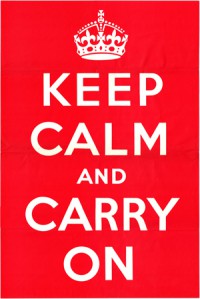 It’s a phrase that’s come to embody a certain, very British, kind of spirit. The blitz spirit. Courage under adversity. The sort of quiet, capable stoicism that keeps its head while all around are losing theirs (and blaming it on you). But where on earth does it come from?
According to The Free Dictionary, “This expression presumably alludes to the trembling lips that precede bursting into tears. [Early 1800s]”
Which is all very well, but why is one only supposed to keep the upper lip stiff? Are we to conclude that a modicum of manly chin-wobble would be acceptable?
Perhaps that was what EM Forster was thinking of when he complained of British public (ie posh private) schoolboys that
They go forth [into the world] with well-developed bodies, fairly developed minds and undeveloped hearts. An undeveloped heart – not a cold one. The difference is important.
In other words: just because one does not allow others to see what one feels does not mean the emotion is not there underneath. Forster would have liked the British male to be allowed to show his emotions, but in this area as in others he was swimming against the tide.
In Victorian and Edwardian Britain, there was a strong movement, fuelled by Darwinism and Imperialism, against overt sentiment of the sort that was in previous centuries perfectly acceptable. To weep copiously was now the sign of the so-called savage, or at the very least of a continental European (which was almost as bad). Generations were taught that public emotion, particularly if displayed by a male, was un-British and worthy only of ridicule and censure.
Luckily for all our psyches the tide is now on the turn and has been for a few decades: you only have to look at the tremendous outpouring of public grief displayed on the death of Princess Diana to see how far we’ve come, although there’s still a long way to go.
However, despite the association with British public schools, cold showers and games for ruffians played by gentlemen, the origins of the phrase stiff upper lip are—brace yourselves—actually American:
Self-esteem…is indicated by a short muscle which acts upon the upper lip, causing generally a fullness and stiffness in the middle…one who has it large can “carry a stiff upper lip”.
Outlines of a New System of Physiognomy published in New York in 1849

Question: Keep a stiff upper lip—or let it all hang out? You choose. ;)
Giveaway: I’m offering a free ebook from my backlist to a randomly chosen commenter on each blog post.
And there’s a grand prize of a signed paperback copy of To Love a Traitor for one lucky commenter on the tour. I’m happy to ship internationally, and the more blog posts you comment on, the more chances you get!
I’ll be making the draws around teatime on Monday 28th September, GMT. Good luck! :D
 JL Merrow is that rare beast, an English person who refuses to drink tea. She read Natural Sciences at Cambridge, where she learned many things, chief amongst which was that she never wanted to see the inside of a lab ever again. Her one regret is that she never mastered the ability of punting one-handed whilst holding a glass of champagne.
She writes across genres, with a preference for contemporary gay romance and mysteries, and is frequently accused of humour. Her novel Slam! won the 2013 Rainbow Award for Best LGBT Romantic Comedy, and her novella Muscling Through and novel Relief Valve were both EPIC Awards finalists.
 Wounds of the heart take the longest to heal.
When solicitor’s clerk George Johnson moves into a rented London room in the winter of 1920, it’s with a secret goal: to find out if his fellow lodger, Matthew Connaught, is the wartime traitor who cost George’s adored older brother his life.
Yet as he gets to know Matthew—an irrepressibly cheerful ad man whose missing arm hasn’t dimmed his smile—George begins to lose sight of his mission.
As Matthew’s advances become ever harder to resist, George tries to convince himself his brother’s death was just the luck of the draw, and to forget he’s hiding a secret of his own. His true identity—and an act of conscience that shamed his family.
But as their mutual attraction grows, so does George’s desperation to know the truth about what happened that day in Ypres. If only to prove Matthew innocent—even if it means losing the man he’s come to love.
Warning: Contains larks in the snow, stiff upper lips, shadows of the Great War, and one man working undercover while another tries to lure him under the covers.
Available in ebook and paperback: Samhain | Amazon US | Amazon UK | ARe
The Fine Print:
*Entrants must be 18 years or older to qualify
*No residency restrictions apply
*All comments must be relevant to the author’s prompt to be eligible (when applicable)
*The Novel Approach will not be held liable for prize delivery unless otherwise specified


 The Novel Approach Reviews
Great post! I did not know where this expression came from, I must recognise it has always intrigued me (together with “to give the cold shoulder”. I guess it is because there is nothing similar in Spanish). As for your question, I do not have a clear answer. I like people showing their feelings, but a too demonstrative person, given to sudden outbursts of feelings, will probably scare me away (as I’m not too prone to show my feelings). So the key would be in keeping a balance, as in most things of life ;)
susanaperez7140(at)gmail(dot)com
LikeLike
Thanks, Susana! No, I had no idea where the phrase “stiff upper lip” came from until I started looking into it. And it’s funny how some phrases translate and some don’t. :)
I like your idea of keeping a balance! Being British, I often feel I ought to be less repressed – but I wouldn’t want to go too far the other way, either! ;)
LikeLike
LOL! That is too funny that the phrase we all associate with the British originated in America.
I agree with Susana that a balance is best. I personally tend to keep a stiff upper lip to a point and then when I can’t hold it anymore and it all flies out. :-)
jen(dot)f(at)mac(dot)com
LikeLike
I know, right? I felt like this when I found out Elizabeth 1 used the word “gotten”! ;)
I sometimes bottle things up, too. The trouble with that is that when my feelings finally come out, it tends to be explosive! :)
LikeLike
I think it depends. My friends are pretty stoic (even *before* one married an Englishman) compared to me. I admire that to a certain extent, but sometimes that means that I don’t learn that I could have helped them with something until it was too late. I tend to hold stuff in in public, but let go more around people I really trust…
LikeLike
*nods* For a very private person, it can be hard to admit they need help. Which is frustrating for the people around them.
LikeLike
Sigh, forgot: vitajex(at)aol(Dot)com
LikeLike
Thanks for a really interesting post! I tend to be a more expressive person, which isn’t always a good thing. amaquilante(at)gmail(dot)com
LikeLike
Expressive can be good too – at least everyone will know where they stand with you! ;)
LikeLike
Well this was quite a interesting post. I usually keep a stiff upper lip around people I don’t know very well and family as well, but not among close family.
LikeLike
*nods* I think a lot of people only let it all hang out at home.
Glad you enjoyed the post! :)
LikeLike
Interesting post. After reading it, I realized that there are quite a bit of similarities to many Asian cultures. You’re not allowed to show extreme emotions or “lose face.” It’s quite a bit different that the usual American openness. I suppose I’m a mix of cultures. Not sure which is best. :)
waxapplelover (at) gmail (dot) com
LikeLike
Ooh, interesting. You would think this would make your average Victorian Brit have some respect for and fellow-feeling with Asian culture, wouldn’t you? Sadly, of course, you’d be wrong. :(
Hopefully you have the best of both worlds! (I know this doesn’t always work out in practice, alas.)
LikeLike
Tried to stiff my upper lip and I truly believe I ended up looking more like a duck! LOL!! Meh. Thanks for the great post!
taina1959 @ yahoo.com
LikeLike
LOL! I hope you took a selfie to preserve the moment for posterity!
And thank you! :)
LikeLiked by 1 person
What an enjoyable post; I too was in the dark as to the history of “stiff upper lip.” To Love a Traitor sounds wonderful. Much success with your writing!
LikeLike
Thank you! *beams*
LikeLike
Hi, everyone, thanks to all of you for stopping by to chat with JL on the To Love a Traitor blog tour.
I was just informed that “Waxapplelover” has been selected as today’s winner, so congratulations! :)
LikeLike