 TNA: Hi, Paul, thanks so much for being here with us today. Why don’t we start out by having you tell us a little bit about yourself? Hobbies, interests, odds and ends things that make you, you.
PAF: Hi, Lisa, I’m so glad you asked me to be here. Wow. That’s an interesting question. Hmm. What makes me, me? I guess part of who I am came from the way I was raised, a kind of a nomadic existence in the 1950s. My mom was a single mom and during those times it wasn’t cool to be raising a child alone without a father, 2.4 brothers and sisters and a cat or dog that didn’t shed. We had the dog, a little Maltese poodle we both loved dearly and who traveled with us during those years, but unfortunately, he shed. :)
I was the first in my lower middle class family to get a college education and that was mainly due to my grandparents who helped us when Mom had difficulty finding a place to live or gainful employment. After college, I joined Peace Corps and spent almost five years living and teaching in Haile Selassie’s Ethiopia. When I was 13, I wrote my first storybook about a train that toured African game parks. So I guess it was kind of prophetic that I ended up in the land of thirteen months of sunshine—if you don’t count the two very heavy rainy seasons.
Until I retired, I taught adults with learning disabilities, physical disabilities and emotional problems in two community colleges in California, so I guess you could say my love of diversity continued on in my professional career and played a large part in what friends I made and what job choices I made.
I’ve been writing fiction for the past twenty some years, so I’m kind of a newbie, having only a stack of some very boring and sleep inducing professional journal articles under my belt up to that point. Oh, and a master’s thesis and doctoral dissertation, but they really don’t count as writing. (Please yawn here.) I started writing fiction when my mother passed away. It seemed to be the only way I could deal with my grief by making up worlds where I had control over what happened to the characters. Then of course, being gay and living through the worst of the AIDS crises in the mid-1980s did a number on most of us, so I imagine those terrible times contributed to my need to control the world around me since we had absolutely zero control over AIDS. I guess, like everyone else, I’m the sum total of my experiences both good and bad.
TNA: Do you remember when the writing bug hit you? Do you remember the first story you wrote that you allowed someone to read for something other than a school assignment?
PAF: The book about Africa was a 7th grade English assignment so we can’t count that. I think my writing experience was jumpstarted in Africa by what I was seeing and experiencing daily. I wasn’t’ one to keep a journal, but I did write air grams home every week to my mother, grandmother and to other relatives but not to close pals my age. (I remember being a loner in college, mainly because I had to commute such a long distance from our home on the San Francisco Peninsula to college in the city, so I didn’t make a lot of friends easily.) But in the weekly air grams, I chronicled the unique events of the day: my teaching, the students, the trips I made to East Africa, Egypt and the Middle East on vacation, and the general unrest in the country. At that time I was stationed in Asmara, Eritrea, a part of Ethiopia via His Royal Majesty’s say so. (Most Eritreans hated Ethiopians and Haile Selassie.) In later years I would write more about these times either in short memoir or through fictionalizing the characters and the events. I wrote many short stories with my mom in mind, a sort of freewheeling sprit not unlike the fictional character Auntie Mame. My mother was very much like her. If we ever had two nickels to rub together, we’d laugh at our bills and rush off to a late night movie. That’s another thing: movies and books. I grew up on some of the great films of those years and today still spend hours watching them on DVD and incorporating some of film technique into my fiction writing. I also love live theater. (When I was four, Mom took me to see Mae West in a live production of Diamond Lil. I must have been the only child in the theater.) So for hobbies and loves, movies, books and theater are all tied together.
TNA: Who would you say was your biggest supporter when you started writing creatively?
PAF: I’d have to say a writing instructor I had in the 1990s. I enrolled in a writing class at Cal Poly. My instructor, Ingrid Reti, was so excited about the process of putting words together in unusual and striking ways, and was so supportive and accessible to her students, that in later years we became great friends. Ingrid was the kind of person who always asked you first what YOU were writing and never spoke about herself or her work, even when she published her poetry books or her gorgeous coffee table book, Steinbeck Country—she was an expert on all of his novels and short stories. She also never spoke about her background as a young Jewish child living in Nuremberg during the worst part of the Hitler years or her terrifying journey to England on the Kindertransport. We discovered all these things after her death from her daughter.
TNA: If you had to choose, which of your books would you say you’re the most proud of?
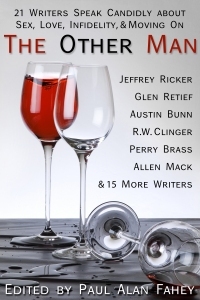 PAF: I’m very proud of our nonfiction anthology, The Other Man: 21 Writers Speak Candidly About Sex, Love, Infidelity, & Moving On. (It’s a 2013 Rainbow Award Finalist.) Proud because I was handed this project by a much-admired writer and essayist, Victoria Zackheim. Victoria edited the wildly successful anthology, The Other Woman, and asked me if I’d like to edit the gay companion, The Other Man. Of course, I jumped at the opportunity then immediately wondered if I’d be up to the challenge since this was a new experience for me. I was terrified I’d let her down, afraid that the book wouldn’t see a publisher and…well, you get the idea. But then I started contacting writers and asking them to contribute and it was amazing how positively they responded. Along the way I met some wonderful writers like Christopher Bram, author of Gods & Monsters, Armistead Maupin and Edmund White, as well as the playwrights, Charles Busch, Mart Crowley, and Christopher Durang, and the list just went on and on. If this was my Andy Warhol 15 minutes, I can tell you it’s lasted three years throughout the process of getting the book published and it’s still going on with the promotion. So, yes, The Other Man would have to be the highlight of my writing and editing experience so far. It’s been quite a ride.
TNA: Those of us who don’t write tend to picture authors sitting down at the PC and effortlessly laying down a story start to finish. In correcting that misperception, what would you say is the most difficult part of the writing process?
PAF: I can tell you for me it isn’t effortless. Far from it. To begin with, I’m not a writer who writes every day. My husband, Bob, and my kids—read shelties here—are really my world and writing is somewhere down the priority list after them. I know this isn’t the typical response from writers who often say things like writing is my life, or there isn’t a moment I’m not writing, or I’ve been writing since birth. That just isn’t me, and won’t be at any time in the future.
The biggest challenge of being a writer for me is dreaming up a story that I think readers will like. And that takes time, especially when I’m working with the same characters in a series that spans several years. Characters who grow, change, do unpredictable things, and talk to me constantly and tell me what they are happy doing and what they absolutely will not do. I know it sounds schizophrenic but they call the shots most of the time.
So back to the process. When I begin a story I do a lot of thinking first. A lot of what-if-ing. I don’t want to bore anyone here but this, in brief, is what I do BEFORE I start writing. I write my novellas, especially the books in the Lovers & Liars Wartime Series in three acts. First I want to know the specific setting and how the story begins. Then I want to know the event at the end of Act I that shifts the action and moves it into Act II. If I can figure out the ending, that’s great. If I can figure out the major turning point that swings the story arc into Act III, that helps me tremendously. Of course this short outline is not fixed in stone. I often shift turning points and events as I write, but I try not to start until I have most of these story points down. If I can come up with the book’s theme, that’s truly a bonus, and I try to layer it into each scene through metaphor, dialogue, motifs, etc.
TNA: The Lovers & Liars Wartime Series is set in World War II England. How much research has gone in to writing the series?
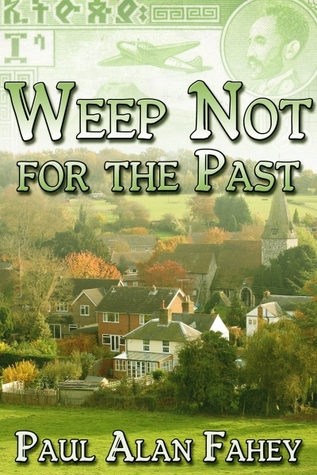
PAF: I have to do a lot of research in the thinking stage before I write. I also have to do a lot of rechecking as I’m writing because it’s so easy to introduce elements into a story that are either a bit off or wildly inaccurate. As an example, I had a specific English village in mind for Caroline’s cottage in the first book in the series, Bomber’s Moon. I did quite a bit of research online and looked at photos from the 1940s to get the details right. Yet in the second book, Weep Not For the Past, I mistakenly ran a river through the town when there wasn’t one. Up to that point I was ready to name the village, but realized I’d best keep it generic if I didn’t want to run into trouble somewhere down the line from UK readers familiar with that area in Kent. (So for now, Caroline’s cottage is unnamed and somewhere in Kent.)
Two books have been great references for Lovers & Liars in terms of “getting it right.” One is Sarah Water’s brilliant wartime novel, The Night Watch, about women in love with other women and working as ambulance drivers during the London Blitz. The Night Watch got me thinking about gay men and their relationships during this very repressive period and in a country that sent homosexuals to prison at the least provocation. What was life like for them? Of course living as a gay man through the 1950s and 60s in a sexually repressed America gave me quite a bit of empathy to start with, but The Night Watch was the inspiration for the series, sort of the other side of the coin.
The Timetables of History, a huge reference that lists practically every aspect of each year from ancient times to present, was invaluable in the writing. For example, for the 1940s, I not only discovered the critical war events for that year but also what people were reading, what movies they watched and the songs they sang. This type of detail made the period come alive for me and also suggested some fun and interesting bits for characterization and dialogue that added to the atmosphere of the times. Anyone who is a writer of historical fiction should grab a copy of this indispensible resource.
 TNA: What is your favorite sort of story to write, contemporary, historical, or do you like dabbling in all sub-genres?
PAF: Most of my early fiction was contemporary lit and written from the female point of view. But I think during the past few years, I’ve truly found my writing niche in gay historical romance, especially within the WW II period. Given that I was born during WWII and my father and stepfather both served in the military—one in Europe and the other in the South Pacific—I must have come by this obsession naturally.
TNA: Do you still, even now, feel nervous when you submit a new manuscript for publication? Is there still that fear that it won’t be accepted?
PAF: Absolutely. I love working with JM Snyder at JMS Books. She is the ultimate professional and I respect her tremendously. But I always worry she might not like the next book in the series. So far, that hasn’t been the case, but I’m very neurotic in that respect. Being a fallen away Irish Catholic and superstitious to the hilt doesn’t help much either. I was born a worrier and I doubt I will ever break this habit.
Along with this initial fear that no one will like what I’ve written—I’m talking readers here as well—my other hat as an editor often kicks in, and I try not to send anything in to my publisher unless I feel it’s properly edited and the ms is the best it can be. So, yes, I worry all the time about getting my work published. (People who know me well know I worry about everything so thinking someone will hate my work fits in nicely with who I am. )
TNA: What are some of the primary qualities you’d say all of your MCs share?
PAF: I think mainly it’s having a sense of humor. I’m so glad you asked me this question, Lisa, because the one thing I want to convey to the reader is that my books are not heavy reads full of misery and sadness. True, these were terrible times of unbelievable horror, yet the British soldiered through the war in such an incredible way that I try to use humor to lighten the atmosphere when the characters are together. One thing I love doing is getting the dialogue as right as I can. And it’s interesting how much humor my characters find in these scary situations. Again, they talk to me on a regular basis once I start a novella, and I just follow their lead. If Caroline and Cyril, while honeymooning on the Isle of Man, want to have a silly conversation about fish when the atmosphere around them is full of danger and intrigue, I go with it. If my characters end up on a lonely coastline in the lantern room of a lighthouse with German bomber planes headed their way, there’s always time for an intimate, playful scene between the male lovers.
TNA: Of all the characters you’ve created, do you have a favorite? If so, who and why?
 PAF: It would have to be Caroline hands down. I identify closely with her take on the world. She’s carefree but not careless. She accepts Leslie and Edward as lovers and welcomes the couple into her home without a second thought. She’s not judgmental but kind and understanding, and above all she enjoys a stiff drink and, well, stiff other things, too. She’s tough when she has to be, but sophisticated and witty in dealing with friends and foes alike. In some ways, she reminds me of my mother. Not such a stretch since many of my characters, including the male ones, are composites of my freewheeling mom and myself. I don’t need a psychiatrist to tell me that.
Caroline’s the most fun to write and she seems to be taking center stage with greater frequency in each subsequent novella I write. I’ll have to talk to her about that some day. Right now I’m having too much fun with her.
TNA: Would you care to share a little bit of information on any of your current WIPs?
PAF: I just finished a Christmas story, A Christmas in Kent, out December 8th from JMS Books. The story continues the Lovers & Liars saga. Here’s a teaser:
“December 1941. Caroline, Cyril, Edward, and Leslie are home for Christmas from their recent exploits on the Isle of Man. On the surface all seems right within Caroline’s world, yet there’s something bothering her that can’t be ignored much longer. Christmas in Kent will indeed be full of surprises.”
I’m in the thinking stages for the next novella in the series. It’s now 1942 and the story will have our cast of characters somehow involved in the plot to assassinate Reinhard Heydrich, “the blond beast,” who was one of the prime architects of Hitler’s final solution to exterminate the Jews.
TNA: Where can readers find you on the Internet?
PAF:
TNA: Would you care to share an excerpt from A Manx Tale with us?
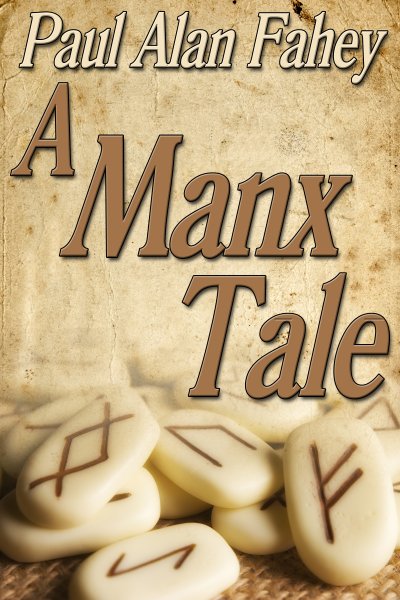
PAF: You bet. Here’s a chapter that sets the mood and tone of the piece. Caroline and Cyril are honeymooning on the Isle of Man. What really got me interested in this particular setting was the fact that during the war, the British interned “suspected enemy aliens” in neighborhood camps around the island. Once I knew that, I was off and running.
Excerpt from A Manx Tale (release date: November 3, JMS Books.)
Chapter 2: What We Know About People
Cyril took Caroline’s hand as they ran across the green, mainly to avoid the harsh winds blowing in from the sea. Tummies full from a dinner of kippers—a local specialty at The Black Dog Inn—the pair decided on a leisurely walk before bedtime. Caroline had never had kippers for dinner, only breakfast—being the well brought up English lady she was—but nothing could match the Manx kippers served fresh from the sea and smothered in butter. In a very short time, she’d grown to crave them.
The couple had gone some distance when they came upon a large neighborhood square consisting of several blocks of houses surrounded by barbed wire and patrolled by sentries. This was Hutchinson Internment Camp, one of the many such places scattered about the isle. Since the beginning of the war with Germany, the camps were deemed necessary “in defense of the realm and in order to detain anyone suspected of being a danger to the public safety.”
“Listen,” Caroline said, grabbing Cyril by the arm and stopping him from moving on. “Is that Bach?”
“Sounds like it. A violin for sure.”
“And notes from a piano,” she said. “It’s coming from one of the open windows. “Wish we could get closer, take a look inside. If only—”
“Uh—huh. That’s the reason for the barbed wire, love. It’s to keep them from getting out. Not us from getting in.”
“I know,” she said. Caroline brushed his cheek with one of her long, lacquered nails. She loved the lean look of his face, the longish dark hair touching his coat collar, even his beaked nose lent him character and made him quite sexy. Even if it does remind me of that chap who plays Sherlock Holmes in the cinema. “Have I told you today how much I love you?”
“About every hour on the hour.”
She nudged him in the ribs. “Don’t press your luck, fella,” and then she pulled his face to hers and kissed him.
“Maybe we should cut this walk short,” he said. “I think I’m working up an appetite.”
“We’ve already eaten, silly.”
“I wasn’t thinking about food,” he said.
She jabbed him a bit harder in the ribs. “In time. In time. Just a few more minutes.” She craned her neck and looked upward to the second floor. “Someone has etched a bird in that blackened window. Such beautiful detail. Edward would appreciate the art here. And the music. I read in the local news that Hutchinson is known for its exhibits, concerts, and even theatrical productions. You’d never know it, would you?”
Cyril shifted his weight from one foot to the other, seemingly anxious to start home. “Well, they have to do something to occupy their time.”
“And that’s the point, isn’t it? Just marking time.” Caroline grew misty eyed and turned away looking out toward the green. “This is the view they see day after day. The wire fence, the street with people walking by free to do whatever they please, and then beyond the road the blasted sea. I’d go crazy.”
“Most probably, love, but you aren’t an enemy alien. Come on, let’s turn back.”
Caroline couldn’t let his remark go. Hadn’t she always spoken her mind? “I think it’s wrong, this whole internment program. It’s demeaning.”
“What would you do then, love?” he said. “Take a chance on letting people with connections to enemy countries roam our streets and plot against us?”
“No, of course not, but many of the detainees are Jewish and confirmed anti-Nazis. What harm can they do? They’ve left their countries for sanctuary and not to conspire against us. Many are even naturalized British citizens.”
“You’re only repeating propaganda, what oppressed people always say. Besides, it’s not what we know about people, but what we don’t know that would terrify us if we did.”
“Sounds like a quote from a boring philosophy professor past his prime, or maybe something you’d read in a fortune cookie.”
“In our business, we know people aren’t always what they seem,” he said.
“Yes. I’ve learned that lesson the hard way. Sometimes I hate what we do in name of King and Country. All the lying and subterfuge. But I still think the practice of locking people away without any rights based on where they were born or—”
He shook his head. “I should know better than to argue with you. Besides, there are reasons those individuals are locked away, as you say. Someone thought they were a threat to our government.
Besides, they do have it quite nice. They all have their roles inside. Some are house leaders, cooks, and even orderlies who make their lives run smoothly. They have jobs in the camps based on life skills.”
“Right,” she said, “and they offer art classes, lectures, watch movies, and live the high life. It’s all one big game of happy families. Yes, husband mine, I’ve heard that government propaganda as well. They might as well be chained to the wall behind prison walls for all we care.”
“Thank you, Alexander Dumas.”
“You’re very welcome.”
“Listen, dear heart, little by little and once they’ve been vetted, we’ve started letting them out, sending them back to—” He fell quiet a moment. Then, “Are we arguing?” he asked. “Is this our first marital quarrel?”
“Could be.” She turned away from him and leaned back against the fence. “This just feels wrong. Someday—”
“Someday these policies will make sense, and we’ll be glad then we had them in place,” Cyril said. He pulled her toward him and wrapped his arms around her. “We need to go back. It’s getting cold.” The night had turned damp. A misty fog hovered above the sea and was moving in to shore.
“Cold, yes,” she said absentmindedly, wondering about one of the houses near the end of the block. “At least the others have some light peeping though. What do you make of that one completely in the dark?
“Probably unoccupied,” Cyril said. “Come on. Let’s get hopping.”
“Yes, you must be right. It just looks so…I don’t know. Forlorn,” she said, and shivered. “There’s a local myth about the fog. Want to hear it?”
“You can tell me about it later. Much later,” he said practically dragging her along.
“And you know something else?” she asked.
“No. What?”
“In my head I know you’re right. With so much hate and misery around us, we can’t afford to take risks. It’s just some of the internees don’t belong in there.”
“I know,” he said.
“You do?”
“Yes, but I still believe quite a few of them do…belong in there. For now.”
“Then why let me go on as I did,” she said, “especially knowing I would agree with you in the end?”
“It’s more fun when you get your dander up.”
“You, too,” she said. “Do you think it will lift its lovely head again any time soon—your dander, I mean?”
“I wouldn’t be in the least surprised.”
“I’m thinking a good old fashioned spanking is just what I need,” Caroline said, “in the privacy of our room, of course.”
“You know,” he said, “I was thinking the exact same thing.”
* * * *
THIS CONTEST IS NOW CLOSED


Hi, Lisa, and thank you again for allowing me to prattle on today on my Lovers & Liars blog tour. Your blog will always be my first stop. Hugs, Paul
LikeLike
I’m so glad to be playing hostess to you today, Paul. You’re always welcome. :) ::hugs::
LikeLike
Paul is a great writer and very modest. He can pick a plot and keep the readers interested.
LikeLike
Thank you, Joan. Very nice of you to say. I hope you’ll like the series, especially A Manx Tale. All the best,
Paul
LikeLike
P.S. The release date for A Manx Tale has been moved up to November 3. Yippee!!
LikeLike
Excellent! I just updated that in your interview. :)
LikeLike
Thank you for the interview and the giveaway! Lovers & Liars Wartime Series sounds very interesting. Would love to win the first book.
LikeLike
Thanks for the interesting interview. Your series sounds very good, so please count me in. Thanks
LikeLike
I’m looking forward to A Manx Tale, Paul, being Manx myself! My Dad used to walk to school past the internment camps on Douglas promenade, and the Hutchinson camp is near my house! I saw the book on the JMS newsletter. A lot of the camps had art etc left behind as the inmates were illegal aliens in the UK rather than military, and tended to be more artistic. One inmate, I think in Hutchinson, was Joseph Pilates of the exercise regime fame. I’d love to know why you chose the IOM as a venue.
LikeLike
Wow, I’m so happy to get these responses. I love the feedback here. Just wanted to thank Jen, Dianna, Suze, and Kiri for their great comments. I’m so loving writing this series and I hope you’ll enjoy it. Suze, I’m Irish and having been raised Catholic I was well aware of Leprechauns and fairies, the storybook kind, before I could walk, possibly before I could talk. I was drawn to the IOM because of your amazing history, that and the myths and legends that seem to abound there. I also felt a kinship with the place as I have with Ireland. I truly hope I’ve done the isle justice because, like my MC, Caroline, I fell in love with the IOM while doing research and writing A Manx Tale. I hope you’ll enjoy it.
LikeLike
I haven’t read any of your books yet, but I love historical romances so I will check them out.
LikeLike
Thanks for the interview and giveaway. I’d love to win Bomber’s Moon. I recently had the opportunity to read The Other Man and loved how it explored the complexities of relationships with humor, warmth and sensitivity.
LikeLike
Hi, Nancy, I’m so glad you liked The Other Man. How nice of you to say so. Thank you for commenting here. :) Paul
LikeLike
Great to read your post today Paul – and very perceptive questions, too :). I treated myself to a copy of The Other Man this week, and I’m also very intrigued bythis new series. I’m deeply admiring of the research you do, and I know it will show in the writing. Good luck with the releases – and I’ll see you in the Christmas batch of titles from JMS books, I have one there too g.
LikeLike
Hey, Clare, It’s great to see you here. Thanks for stopping by and yes, Lisa asked great questions. I hope you enjoy our book, The Other Man. It’s a real three-year labor of love for me and the guys, and I love writing my WWII series. I feel like a medium channeling the characters. Shirley MacClaine, anyone? See you at JMS books for the holidays and hope you’ve rested up. BTW, Bob loves Flying Colors. He can’t put it down. :)
LikeLike
Paul, I certainly had to comment on your post since you were so kind to comment on so many of mine during my blog tour. Best of luck with the book, I love anything with a World War II background.
LikeLike
Hi, Marilyn, thank you for posting here. Your blog tour has been great fun and I’ve enjoyed learning more about your characters and your wonderful series. All the best back, Paul
LikeLike
Oh, I loved the excerpt. It sounds like this is a series that focuses on a group of characters and not just one couple, which is a lot of fun. I definitely need to check this out!
LikeLike
Hey, Ashley, yes, the novellas in the Lovers & Liars Wartime Series focus on two couples, Caroline and Cyril (straight) and Edward and Leslie (gay). So far I’m following a timeline from the early days of the London Blitz to the beginning of 1942. The more I write, the more interesting the characters seem to become and if 1941 is any indication, there will be plenty of changes up ahead. I hope you like the series and thank you for your comment. All my best,
Paul
LikeLike
Happy Sunday, everyone, I hope you’ve had a lovely weekend so far.
Paul Alan Fahey’s contest has come to an end and the winner has been drawn…
Nancy, it looks like you’ll be getting that copy of Bomber’s Moon! Congratulations on your win. Paul has awarded me the honor of delivering an e-copy of the book to you, so expect to hear from me soon. :)
LikeLike
Congratulations, Nancy. I hope you’ll enjoy the first in the Lovers & Liars Wartime Series and you’ll be back for more. All my best,
Paul
P.S. Thank you, Lisa, for hosting. It’s truly been a pleasure. All mine.
LikeLike
It’s been my pleasure, Paul. :)
LikeLike